Teen Sports Performance Training in Mission Viejo, CA

Schedule a Consultation
10+ Years Experience
One-on-One Training
South Orange County

Talent and effort are important in youth sports, but young athletes also need the physical foundation to use their abilities effectively. Strength, coordination, acceleration, balance, mobility, body control, and confidence can all influence how an athlete performs during practices and competition.

At Ladera Fitness, teen sports performance training for Mission Viejo athletes provides individualized coaching designed around each athlete's sport, current abilities, developmental stage, experience, and goals. Training is appropriate for middle school and high school athletes who want to become stronger, move more efficiently, prepare for an upcoming season, or improve their overall athletic confidence.

Instead of giving every athlete the same conditioning circuit, each program is developed according to the demands placed on that individual. A soccer player may need to improve acceleration, deceleration, lower-body strength, and change-of-direction mechanics. A baseball or softball athlete may benefit from better rotational control, shoulder stability, hip strength, and total-body power. A volleyball or basketball player may need a stronger foundation for jumping, landing, lateral movement, and repeated efforts.

The objective is not to treat a teenager like a smaller adult or overload an athlete with exhausting workouts. The objective is to provide age-appropriate instruction that helps the athlete develop useful physical qualities, improve exercise technique, and build habits that can support long-term participation in sports.

Parents interested in discussing their athlete's needs can contact Ladera Fitness to schedule a consultation.

Individualized Athletic Development for Mission Viejo Teens

Young athletes do not all develop at the same rate. Two athletes of the same age may have very different levels of strength, coordination, mobility, training experience, and physical maturity. They may also play different positions, compete at different levels, and respond differently to the same exercise.

That is why individualized sports performance coaching can be more useful than a generic workout intended for an entire team.

A personalized teen athletic training program may consider:

  • The athlete's age and physical development
  • Primary and secondary sports
  • Playing position
  • Current practice and competition schedule
  • Previous strength-training experience
  • Movement mechanics and coordination
  • Mobility and stability
  • Current strengths and areas for improvement
  • History of pain or previous injuries
  • Upcoming tryouts, tournaments, or seasons
  • Short-term and long-term performance goals

These factors help determine which exercises should be emphasized, how much training is appropriate, and how quickly the athlete should progress.

The program can then evolve as the athlete becomes stronger, learns new movements, enters a competitive season, or shifts attention to a different sport.

Building Strength Safely

Strength is an important foundation for many athletic movements. Running, jumping, stopping, changing direction, absorbing contact, throwing, swinging, and maintaining posture all require the athlete to produce or control force.

Teen strength training should prioritize instruction and movement quality before heavier resistance. Athletes need to learn how to position their bodies, control each repetition, use an appropriate range of motion, and understand the purpose of an exercise.

Depending on the athlete's experience, a program may incorporate:

  • Squatting and hinging patterns
  • Single-leg strength exercises
  • Pushing and pulling movements
  • Core stability and anti-rotation exercises
  • Hip and glute strengthening
  • Upper-body stability
  • Loaded carries
  • Controlled jumping and landing drills
  • Body-weight exercises
  • Resistance bands, free weights, or other appropriate equipment

Resistance and complexity are increased gradually. The amount of weight used is only one part of training and should never come before proper technique.

Young athletes who build a strong technical foundation are better prepared to progress safely and use strength effectively in their sport.

Speed and Acceleration Training

Speed involves more than telling an athlete to run as fast as possible. Efficient acceleration requires posture, coordination, force production, rhythm, and the ability to apply force in the intended direction.

Teen speed training can help athletes better understand how to organize their bodies during starts and short sprints. Coaching may focus on arm action, foot placement, body angle, stride mechanics, and the transition from acceleration to upright running.

Depending on the athlete and sport, sessions may include work on:

  • Starting position
  • First-step quickness
  • Short-distance acceleration
  • Sprint posture
  • Arm and leg coordination
  • Force application
  • Running mechanics
  • Repeated sprint ability
  • Reaction to a visual or verbal cue
  • Sport-relevant movement patterns

Not every athlete needs the same sprint drills. A football player, tennis player, lacrosse athlete, and distance runner encounter different movement demands. The training plan should reflect how the athlete moves during competition.

Agility, Deceleration, and Change of Direction

Agility is often confused with moving quickly through cones. Cone drills can be useful, but effective change of direction also requires the athlete to slow down, control momentum, establish a strong position, and accelerate into a new direction.

Deceleration is especially important because many sports require athletes to stop or redirect themselves at high speed. Athletes who cannot control their bodies while slowing down may lose balance, waste movement, or struggle to respond effectively during competition.

Youth speed and agility training may address:

  • Braking mechanics
  • Lateral movement
  • Cutting technique
  • Foot placement
  • Balance during directional changes
  • Hip and knee control
  • Reacceleration
  • Reactive agility
  • Spatial awareness
  • Movement efficiency

The goal is to help athletes move with greater control rather than simply complete drills as quickly as possible.

As an athlete develops better mechanics, drills can become less predictable and include more decision-making. This progression helps connect basic movement skills with the changing conditions athletes face in games.

Jumping and Landing Mechanics

Basketball, volleyball, soccer, football, lacrosse, track and field, and many other sports involve frequent jumping or bounding. Producing force during takeoff is important, but athletes must also learn how to absorb force when they return to the ground.

Landing exercises can teach athletes to control their hips, knees, ankles, and trunk. Early drills may emphasize quiet, stable landings from a low height. More advanced progressions may incorporate repeated jumps, single-leg landings, horizontal movement, or reactions to a cue.

Training may focus on:

  • Balanced takeoff positions
  • Controlled landing posture
  • Hip and knee alignment
  • Ankle stability
  • Force absorption
  • Single-leg control
  • Bilateral and unilateral jumping
  • Horizontal and vertical power
  • Repeated jump mechanics
  • Transitioning from landing into the next movement

Jumping drills should be selected according to the athlete's current abilities. Performing more repetitions is not always better, particularly when technique begins to decline.

Injury-Risk Reduction for Young Athletes

No training program can prevent every sports injury. Contact, unpredictable plays, environmental conditions, and other factors remain part of athletic competition. However, a well-designed program can help an athlete develop qualities associated with safer, more controlled movement.

Teen injury-prevention training may emphasize strength, mobility, stability, landing mechanics, deceleration, body awareness, and appropriate workload progression.

Areas commonly addressed include:

  • Core and trunk stability
  • Hip strength
  • Knee control
  • Ankle stability
  • Shoulder stability
  • Hamstring and posterior-chain strength
  • Balance and coordination
  • Mobility restrictions
  • Movement compensations
  • Exercise and lifting technique

Athletes can also benefit from understanding the difference between productive training effort and warning signs that should not be ignored.

Sports performance coaching is not physical therapy or medical treatment. A teenager experiencing an injury, persistent pain, neurological symptoms, or a medical concern should be evaluated by an appropriate licensed healthcare professional. Performance training can be considered after the athlete has received any required medical guidance or clearance.

Training for Multiple Sports

Ladera Fitness works with young athletes participating in a variety of sports throughout Mission Viejo and South Orange County.

Programs can be adapted for athletes involved in:

  • Soccer
  • Basketball
  • Baseball
  • Softball
  • Football
  • Volleyball
  • Lacrosse
  • Track and field
  • Cross-country
  • Tennis
  • Golf
  • Swimming
  • Water polo
  • Wrestling
  • Martial arts
  • Cheerleading
  • Dance
  • Other school, club, and recreational sports

Although many sports share common athletic qualities, each activity also creates specific demands.

For example, court athletes frequently accelerate, stop, jump, land, and move laterally in a limited space. Field athletes may cover greater distances and react to open, constantly changing environments. Throwing and striking athletes use rotational force and require appropriate shoulder, trunk, and hip coordination.

A thoughtful program develops the athlete's general foundation while accounting for these sport-specific needs.

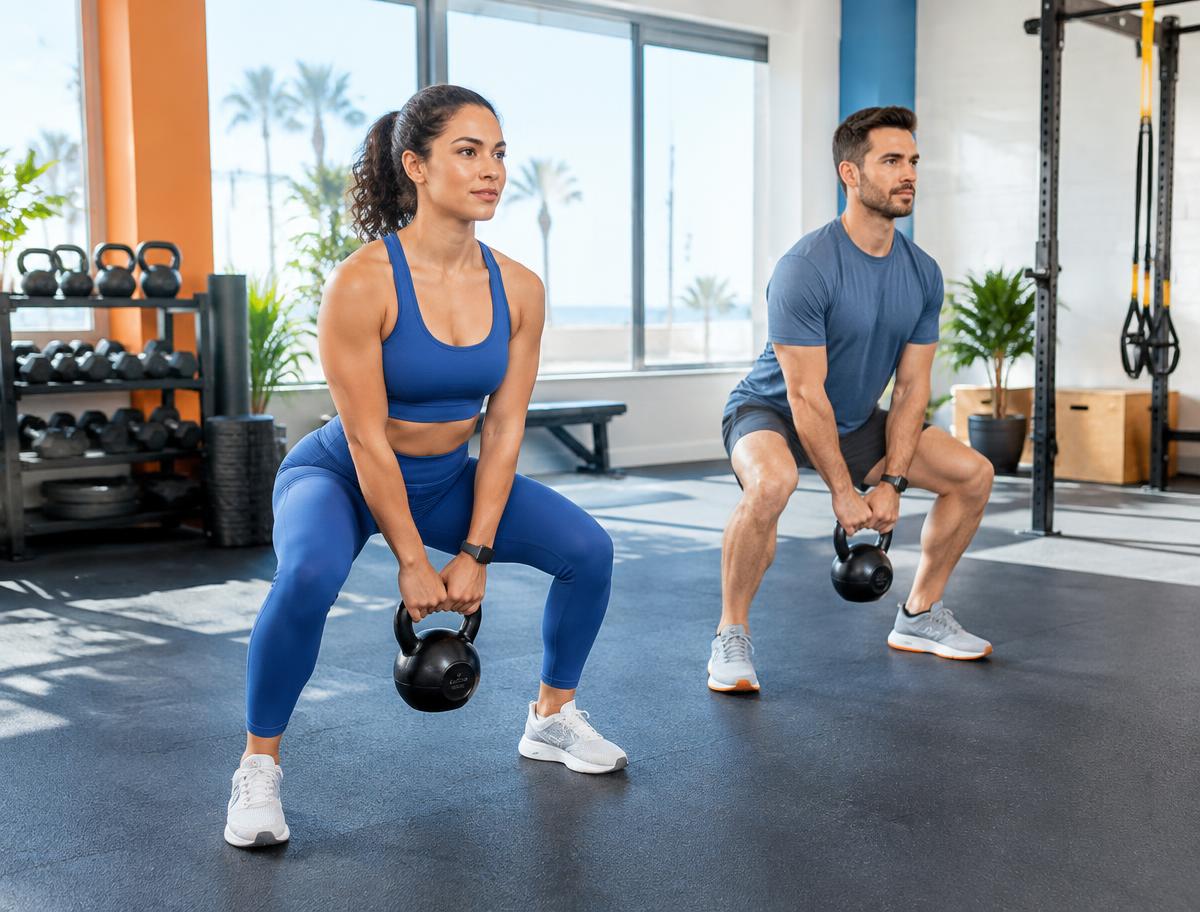
Teen sports performance training serving Mission Viejo CA athletes at Ladera Fitness

Training During the Off-Season

The off-season provides an opportunity to improve physical qualities that may be difficult to address during a demanding competition schedule. With fewer games and practices, athletes may have more time and energy available for strength development, movement instruction, and gradual progression.

An off-season teen sports performance program may emphasize:

  • Improving foundational strength
  • Learning new exercises
  • Correcting inefficient movement patterns
  • Increasing muscle and physical resilience
  • Developing speed and acceleration
  • Improving power
  • Addressing mobility limitations
  • Preparing for future training demands

The off-season should not mean performing random high-intensity workouts every day. Productive training balances challenge with recovery and follows an organized progression.

In-Season Sports Performance Training

Athletes do not necessarily need to stop strength and performance training when their competitive season begins. However, the program should account for games, practices, travel, school responsibilities, and accumulated fatigue.

In-season training may use lower volume and focus on maintaining strength, reinforcing movement quality, and supporting readiness. Training should complement sports participation rather than compete with it.

The appropriate schedule depends on:

  • Number of weekly practices
  • Game or tournament frequency
  • Athlete's playing time
  • Academic demands
  • Travel
  • Sleep and recovery
  • Training experience
  • Current soreness or fatigue
  • Priorities established by the athlete, parent, and coaching team

Communication is important. When the athlete's sports schedule changes, the performance program should be adjusted accordingly.

Preparing for Tryouts and Upcoming Seasons

Tryouts can be stressful for young athletes, especially when they feel physically unprepared or uncertain about their conditioning.

Starting early allows an athlete to build capacity gradually instead of attempting to make major improvements during the final week before evaluations.

A tryout-preparation program may focus on:

  • General strength and conditioning
  • Acceleration and quickness
  • Sport-relevant movement
  • Repeated effort capacity
  • Confidence with basic athletic skills
  • Consistent training habits
  • Appropriate recovery
  • Entering tryouts prepared rather than exhausted

While no training program can guarantee selection for a team, preparation can help athletes arrive feeling more capable and confident.

What Parents Can Expect

Parents should understand what their teenager is doing and why it is included in the program.

The initial consultation provides an opportunity to discuss the athlete's sports background, current schedule, goals, previous training, and any known limitations. The athlete's starting point can then be evaluated through age-appropriate movement and exercise tasks.

The early stages of training typically emphasize:

  • Learning terminology and expectations
  • Establishing safe exercise habits
  • Assessing basic movement patterns
  • Practicing foundational strength exercises
  • Developing coordination
  • Identifying appropriate starting resistance
  • Building a positive coach-athlete relationship
  • Creating a realistic training schedule

As the athlete progresses, exercises can become more challenging and more closely connected to performance goals.

Parents should also expect honest communication. Athletic development takes time, and progress is not always linear. Growth, school schedules, sports seasons, sleep, stress, and training consistency can all affect performance.

Ready to Elevate Your Athlete's Performance in Mission Viejo?

Schedule your consultation with Ladera Fitness today.

Schedule a Consultation

Why Mission Viejo Families Choose Ladera Fitness

Mission Viejo families have access to numerous school, club, and recreational sports opportunities. Athletes participating in these programs often receive excellent sport-specific instruction, but team practices may not provide enough time for individualized strength, movement, or conditioning work.

Ladera Fitness provides personalized coaching that can complement an athlete's existing team activities.

Families may choose Ladera Fitness for:

Individualized Programming

Age-Appropriate Strength Training

Speed and Agility Development

Movement Mechanics Focus

Gradual Progression

Supportive Training Environment

The focus is on helping each athlete build a stronger foundation rather than comparing every teenager with the same standard.

Learn more about me and my training.

Ladera Fitness also provides teen sports performance training in Rancho Mission Viejo, CA for athletes in that community.

Frequently Asked Questions

Contact Ladera Fitness

Ready to start your fitness journey with a trusted personal trainer in Ladera Ranch, CA?

Contact Ladera Fitness today to schedule your consultation and learn more about my personalized training programs.

Whether your goal is weight loss, strength training, improved athletic performance, or better overall health, I'm here to help you achieve lasting results.

Schedule Your Consultation