Teen Sports Performance Training in Rancho Mission Viejo, CA

Schedule a Consultation
10+ Years Experience
One-on-One Training
South Orange County

Young athletes need more than sports practice alone to reach their potential. Skills such as dribbling, shooting, throwing, hitting, passing, or serving are developed through sport-specific practice, but athletic performance also depends on a strong physical foundation.

Strength, balance, coordination, speed, acceleration, mobility, stability, body control, and the ability to safely produce and absorb force can all influence how effectively a teenager performs during competition.

At Ladera Fitness, teen sports performance training for Rancho Mission Viejo athletes provides individualized coaching designed to develop these underlying athletic qualities.

Programs are built for middle school and high school athletes who want to become stronger, move more efficiently, prepare for an upcoming season, improve athletic confidence, or develop a better physical foundation for long-term participation in sports.

Rather than putting every athlete through the same workout, training is customized according to the teenager's sport, current abilities, experience, goals, schedule, and physical development.

Parents interested in personalized athletic coaching can contact Ladera Fitness to discuss their teen athlete's goals.

Building the Physical Foundation Young Athletes Need

A teenager can practice a sport frequently while still having weaknesses in basic athletic movement.

Some athletes are quick but lack strength. Others are strong but struggle to control their bodies when changing direction. Another athlete may have good endurance but limited mobility or poor landing mechanics.

Sports performance training provides an opportunity to address these foundational qualities outside the pressure of team practice and competition.

Depending on the athlete, training may focus on developing:

  • Lower-body strength
  • Upper-body strength
  • Core stability
  • Balance
  • Coordination
  • Acceleration
  • Deceleration
  • Change-of-direction ability
  • Mobility
  • Body awareness
  • Jumping and landing control
  • Muscular endurance
  • Athletic power
  • General conditioning

Developing these qualities can provide a stronger platform for sport-specific skills.

The objective is not to turn every young athlete into a bodybuilder or simply make workouts harder. Effective youth athletic development teaches teenagers how to move, control resistance, understand exercise technique, and gradually increase their physical capabilities.

Individualized Training Instead of Generic Conditioning

Many athletes already participate in demanding team practices. Adding another random high-intensity workout is not always what they need.

A personalized teen sports performance program looks at what an athlete is already doing before deciding what additional training should include.

Important factors may include:

  • Age
  • Physical maturity
  • Primary sport
  • Secondary sports
  • Playing position
  • Current team practices
  • Competition schedule
  • Previous strength-training experience
  • Current conditioning level
  • Movement limitations
  • Previous injuries
  • Upcoming tryouts
  • Tournament schedules
  • Performance goals

A high school athlete participating in practices five days per week may need a different program from an athlete who is currently in an off-season development period.

Likewise, a beginner learning resistance exercises should not be trained exactly like an experienced athlete who has already developed proper lifting technique.

Personalized programming allows the difficulty, volume, exercises, and progression to match the individual athlete rather than forcing the athlete to match a predetermined workout.

Teen Strength Training in Rancho Mission Viejo

Strength provides the foundation for many athletic actions.

Running faster requires athletes to produce force against the ground. Jumping requires force production. Landing requires the athlete to absorb and control force. Contact sports require stability and strength when interacting with opponents.

A carefully designed youth strength-training program helps athletes improve these abilities while learning how to exercise correctly.

Teen strength training may include:

  • Squat variations
  • Hip-hinge movements
  • Lunges and split squats
  • Single-leg exercises
  • Upper-body pushing movements
  • Upper-body pulling movements
  • Core stabilization exercises
  • Loaded carries
  • Resistance-band exercises
  • Body-weight exercises
  • Appropriate free-weight exercises

Athletes begin with movements and resistance levels that match their ability.

Progress is based on technique and control rather than simply adding more weight.

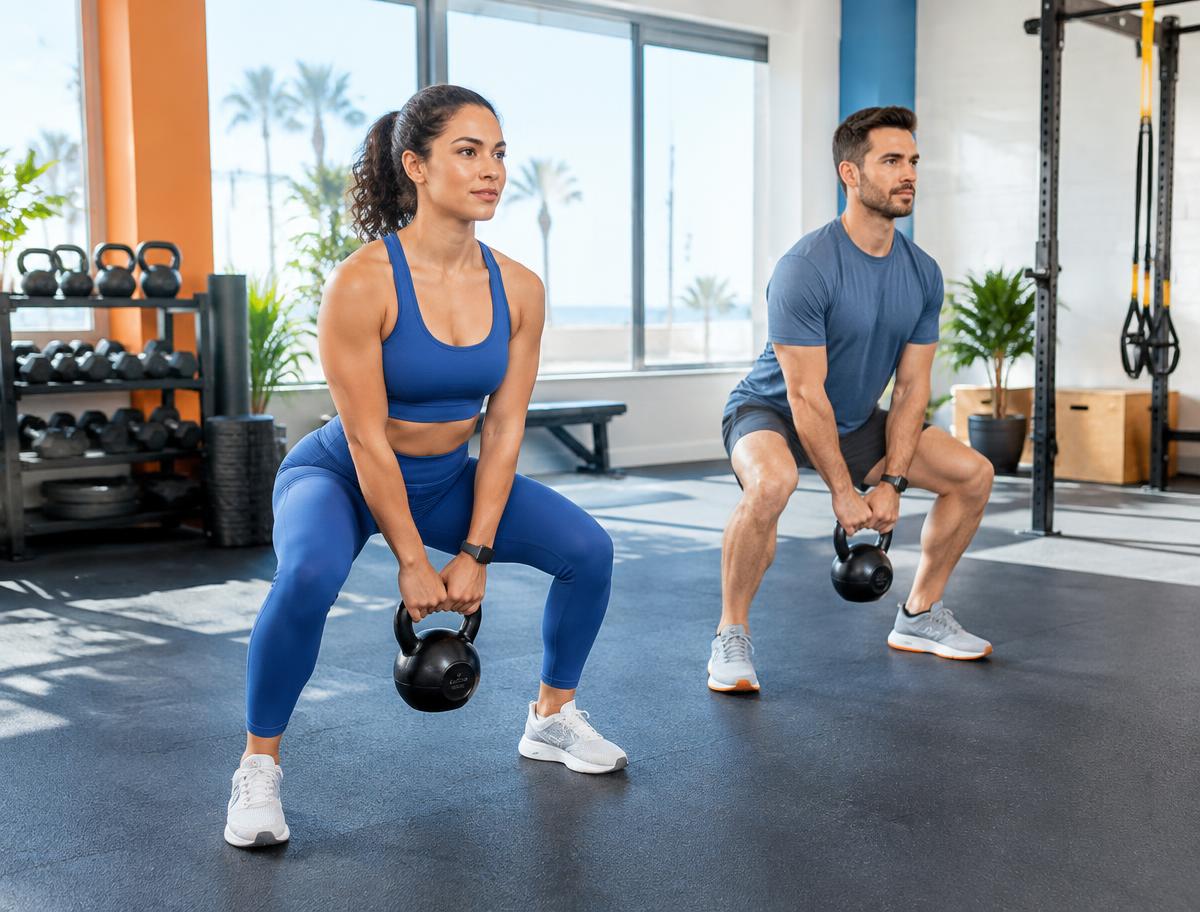
Teen sports athletic performance training serving Rancho Mission Viejo CA at Ladera Fitness

Speed Training for Teen Athletes

Running speed is valuable in many sports, but simply telling an athlete to run faster does not necessarily improve sprint mechanics.

Athletes can benefit from learning how to position their bodies and apply force more effectively during acceleration.

Youth speed training may address:

  • Starting mechanics
  • First-step acceleration
  • Sprint posture
  • Arm action
  • Foot placement
  • Body angles
  • Coordination
  • Short-distance sprinting
  • Reaction starts
  • Repeated acceleration

Different sports require different forms of speed.

The goal of sports performance training is to develop speed in a way that supports the physical demands the athlete actually encounters.

Agility and Change-of-Direction Training

Changing direction efficiently requires more than fast feet.

An athlete must first control momentum, slow the body, establish an effective position, redirect force, and accelerate again.

That makes deceleration an important part of agility training.

Teen agility training may incorporate:

  • Lateral movement
  • Cutting mechanics
  • Controlled stopping
  • Directional changes
  • Foot-placement drills
  • Hip and knee control
  • Balance
  • Reaction drills
  • Reacceleration
  • Multi-directional movement

Early drills may be predictable so the athlete can learn proper mechanics. As technique improves, exercises can become more reactive and require the athlete to respond to visual, verbal, or movement-based cues.

This progression helps bridge the gap between controlled training exercises and the unpredictable nature of competition.

Developing Better Jumping and Landing Control

Athletes involved in basketball, volleyball, soccer, football, lacrosse, track, cheerleading, and other sports regularly produce and absorb force through jumping.

Jumping higher can be valuable, but landing correctly is equally important.

Young athletes need to learn how to control their trunk, hips, knees, and ankles as they return to the ground.

Training may include:

  • Basic landing positions
  • Vertical jumps
  • Horizontal jumps
  • Single-leg balance
  • Single-leg landing exercises
  • Repeated jumping
  • Lateral jumping
  • Controlled bounding
  • Jump-to-sprint combinations
  • Reaction-based jump drills

Exercises should progress from simple to more complex.

An athlete who cannot consistently control a basic landing does not need to immediately perform advanced plyometric exercises.

Building the foundation first helps athletes develop power while maintaining movement quality.

Training Around Club and School Sports Schedules

Many Rancho Mission Viejo athletes participate in organized sports throughout much of the year.

Between practices, games, tournaments, school responsibilities, homework, travel, and family commitments, schedules can become demanding.

Effective sports performance training must work alongside those responsibilities.

An athlete's training plan may change according to whether they are currently:

  • In the competitive season
  • In preseason
  • Preparing for tryouts
  • Between seasons
  • Playing multiple sports
  • Participating in tournaments
  • Taking a short recovery period
  • Developing strength during an off-season

The emphasis and training volume can be adjusted accordingly.

For example, an athlete may perform more intensive strength development during the off-season. During a busy competitive season, workouts may become shorter and focus on maintaining strength, movement quality, and readiness.

This type of flexible programming helps sports performance training complement team activities rather than unnecessarily competing with them.

Ready to Develop Your Athlete's Performance in Rancho Mission Viejo?

Schedule your consultation with Ladera Fitness today.

Schedule a Consultation

Off-Season Athletic Development

The off-season can be one of the most productive periods for improving athletic qualities.

Athletes have fewer competitions and may have more opportunity to gradually build strength, improve technique, address movement limitations, and develop physical qualities that require consistent training.

An off-season program may emphasize:

  • Foundational strength
  • Increased strength capacity
  • Speed development
  • Acceleration mechanics
  • Athletic power
  • Mobility
  • Movement technique
  • Body control
  • Conditioning
  • Building greater training tolerance

The off-season is also an excellent opportunity to learn new exercises because athletes are not simultaneously managing a demanding game schedule.

Rather than waiting until immediately before tryouts, athletes can use this period to build a stronger foundation over time.

Preparing for Tryouts

Tryouts can create significant pressure for teenage athletes.

Young athletes may worry about conditioning, strength, speed, or whether they can keep up with other players.

A structured preparation period helps athletes enter tryouts with greater physical confidence.

Tryout preparation may focus on:

  • General conditioning
  • Acceleration
  • Repeated effort ability
  • Agility
  • Strength
  • Movement efficiency
  • Athletic confidence
  • Consistent exercise habits

Preparation should ideally begin well before the week of tryouts.

Trying to dramatically increase conditioning immediately before an evaluation can leave athletes unnecessarily fatigued or sore.

A gradual training approach provides more time to build fitness while allowing the athlete to arrive ready to perform.

Training for Multi-Sport Athletes

Participating in multiple sports means athletes encounter a variety of physical demands throughout the year.

A teenager may play soccer in one season, participate in track during another, and join a club program between school seasons.

Sports performance training can help develop qualities that transfer across different activities.

General athletic qualities include:

  • Strength
  • Balance
  • Coordination
  • Speed
  • Stability
  • Mobility
  • Power
  • Movement control

The program can then shift emphasis as the athlete transitions from one sport to another.

Training should also recognize when a multi-sport athlete needs additional recovery rather than additional workload.

Balancing development and recovery is especially important when multiple seasons overlap.

Sports Performance Training for Multiple Sports

Ladera Fitness can develop individualized athletic training programs for teenagers participating in many different sports.

These may include:

  • Soccer
  • Football
  • Baseball
  • Softball
  • Basketball
  • Volleyball
  • Lacrosse
  • Track and field
  • Cross-country
  • Tennis
  • Golf
  • Swimming
  • Water polo
  • Wrestling
  • Martial arts
  • Cheerleading
  • Dance
  • Other competitive and recreational sports

Each sport places different demands on the athlete.

Injury-Risk Reduction Through Better Movement

Sports always involve some risk of injury, and no training program can guarantee that an athlete will remain injury-free.

However, developing strength, stability, mobility, coordination, and better movement mechanics can help young athletes become more physically prepared for the demands they encounter.

Training may address:

  • Lower-body strength
  • Hip stability
  • Knee control
  • Ankle stability
  • Core strength
  • Shoulder stability
  • Posterior-chain strength
  • Balance
  • Landing mechanics
  • Deceleration mechanics
  • Mobility
  • Exercise technique

Athletes can also learn how to recognize when fatigue causes their technique to deteriorate.

A teenager experiencing persistent pain, an acute injury, or another medical concern should be evaluated by an appropriate licensed healthcare professional before beginning or returning to sports performance training.

Sports performance coaching does not replace medical rehabilitation or physical therapy.

Learn more about Ladera Fitness's injury prevention training.

Teen Sports Performance Training Throughout South Orange County

Ladera Fitness provides teen sports performance coaching for athletes throughout South Orange County, including Rancho Mission Viejo, Ladera Ranch, and neighboring communities.

Ladera Fitness also provides teen sports performance training in Mission Viejo, CA for athletes in that area.

For more information about the overall teen sports performance program, visit the teen sports performance training page.

Frequently Asked Questions

Contact Ladera Fitness

Ready to start your fitness journey with a trusted personal trainer in Ladera Ranch, CA?

Contact Ladera Fitness today to schedule your consultation and learn more about my personalized training programs.

Whether your goal is weight loss, strength training, improved athletic performance, or better overall health, I'm here to help you achieve lasting results.

Schedule Your Consultation